
Introduction
This data-driven snapshot summarizes live availability and price trends for 43045-0812 to help engineers and procurement teams decide whether to buy now, wait, or change sourcing strategy. The market shows mixed inventory signals across official distributors, marketplaces and surplus channels; price bands vary significantly by condition and quantity. The report focuses on actionable procurement steps, practical checks, and short-term forecasts built from distributor inventory cues, aftermarket listings, and observed unit-cost bands.
Product snapshot: 43045-0812 at a glance (Background)
Point: Buyers should treat 43045-0812 as a two-row, wire-to-board header family with multiple finish and packaging options. Evidence: Typical catalog entries indicate through-hole, specific pitch and row count, and varied plating options; footprints differ by orientation and tray vs. reel packaging. Explanation: Confirming mechanical and plating details prevents mismatch when comparing stock and pricing across sellers.
Key specifications to confirm
Point: Verify positions, pitch, row count, plating/finish, orientation and mounting style. Evidence: Critical specs include number of positions per row, overall pitch (mm), through-hole vs. SMT, and finish such as tin or gold. Explanation: Mismatched specs create false positives in availability searches and can result in unusable shipments or costly returns.
Part-number variants and common numbering pitfalls
Point: Suffixes and legacy codes can hide the exact 43045-0812 SKU. Evidence: Vendors may list kit, tray, or bulk SKUs and older cross-references that omit the dash or change suffixes. Explanation: Use exact-string searches with and without dashes, add filters for finish/packaging, and exclude kit or legacy prefixes to reduce false matches.
Current availability snapshot (Data analysis)
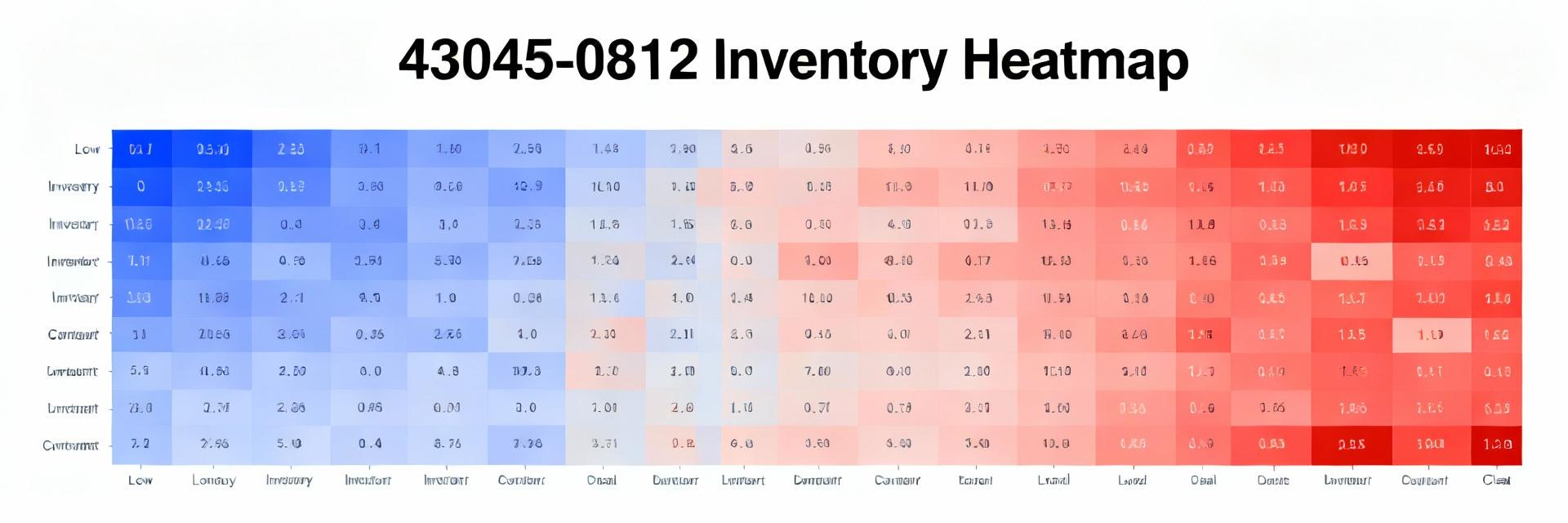
Point: A real-time availability view requires standardized data pulls across channels. Evidence: Useful fields are in-stock quantity, lead time, ETA, warehouse location and condition (new vs. surplus). Explanation: Normalizing these data points into a single table or heatmap lets procurement quickly assess true available supply versus promised future stock.
Distributor & marketplace inventory overview
Point: Build a unified snapshot from distributors, authorized marketplaces and distributor marketplaces. Evidence: Pull in-stock qty, confirmed lead times, ship-from location, and any backorder ETAs; refresh cadence depends on volatility. Explanation: For volatile parts like 43045-0812, daily refreshes are recommended during sourcing windows; present availability as a sortable table or color-coded heatmap so teams see firm stock versus lead-time risk.
Surplus and aftermarket supply signals
Point: Surplus listings can temporarily relieve shortages but add price and quality risk. Evidence: Aftermarket sellers often show limited lots at elevated unit prices and vary in stated condition. Explanation: Check seller photos, lot codes and minimum order quantities; treat surplus as short-term stopgap and factor inspection and rework costs into landed unit price.
Price trends and historical movement (Data analysis)
Point: Price bands differ markedly by channel and quantity. Evidence: Typical retail, bulk and surplus listings form three distinct bands: prototype single-unit retail, mid-volume small-production pricing, and surplus or broker premiums. Explanation: Presenting a 6–12 month price band chart highlights volatility and helps identify inflection points for ordering decisions.
Retail vs. bulk vs. surplus price bands
Point: Retail unit costs are highest at single-unit buys; bulk breaks deliver steep declines. Evidence: Common inflection points occur at prototype qty (1–10), small production (100–1,000) and large production (>1,000) where per-unit price falls notably. Explanation: Procurement should chart price trends and MOQ bands to show where negotiated pricing or alternative approval yields worthwhile savings.
Price drivers and short-term forecast
Point: Short-term movement is driven by inventory tightness, raw-material and logistics cost shifts, and surplus dumps. Evidence: When on-hand stock falls below a critical threshold, aftermarket premiums and expedited logistics push prices up. Explanation: A simple forecast template: if aggregate on-hand Y weeks, expect upward pressure within Z weeks; set X and Y to match BOM risk posture.
Sourcing & procurement tactics (Method guide)
Point: Verification and clear communication reduce receipt risk. Evidence: A verification checklist should include datasheet cross-check, visual confirmation of part marking/packaging, lot code and country of origin, and lead-time confirmation in writing. Explanation: Suppliers should provide photos, certificate of conformance, and written lead-time guarantees for bulk buys to avoid surprises.
How to verify stock, certifications and lead times
Point: Use a step-by-step checklist before issuing PO. Evidence: Steps: cross-check datasheet, request close-up photos of label/lot codes, ask for C of C, confirm warehouse origin, and obtain written lead-time and MOQ terms. Explanation: A short supplier script—request photos, C of C, and firm ship date—standardizes verification and provides evidence for contractual remedies.
Order strategies to minimize cost and delivery risk
Point: Mix tactical ordering with contractual protections. Evidence: Options include staggered releases, negotiated MOQs, safety-stock uplifts, and qualifying approved alternatives. Explanation: Mitigate risk with pre-shipment inspection, sample testing, and PO clauses for incorrect or nonconforming parts to protect schedules and budgets.
Comparative procurement scenarios & recommended action plan (Case + Action)
Point: Scenario-based actions clarify tradeoffs. Evidence: Three short cases—prototype, production ramp, last-time buy—highlight different priorities. Explanation: For prototypes accept retail buys; for production negotiate bulk pricing and secure safety stock; for last-time buys source verified surplus with inspection and higher acceptance criteria.
Sample scenarios: prototype → production → last-time buys
Point: Each lifecycle stage needs a different sourcing posture. Evidence: Prototype: small retail buys with quick ship; Production: locked supplier, staggered orders and buffer stock; Last-time buy: larger buy from authorized stock or qualified surplus with inspection. Explanation: Decision triggers include production start date, BOM risk threshold and minimum acceptable on-hand quantity.
Pre-purchase checklist & final recommendations
Point: A concise pre-purchase checklist prevents common errors. Evidence: Confirm spec, verify availability and lead time, compare price bands, inspect samples, and set contractual protections. Explanation: Based on snapshot signals, the primary recommendation is to secure verified stock or negotiate staged deliveries rather than rely on unverified aftermarket lots.
Summary
Current signals show mixed availability and fragmented price trends for 43045-0812: firm distributor stock exists but is uneven across regions, while surplus supplies offer relief at a premium and with quality risk. Top action: verify exact spec, demand verification from suppliers, and favor staged orders or negotiated MOQs over one-off surplus buys. Teams should refresh live inventory and price data immediately before placing orders; 43045-0812 decisions should be data-driven and risk-mitigated.
Key Summary
-
Confirm exact mechanical and finish specs before comparing stock to avoid false matches; this protects procurement from unusable shipments.
-
Use daily refreshes during sourcing windows and present availability in a normalized table to spot true in-stock vs. ETA stock.
-
Chart 6–12 month price bands by channel to locate unit-cost inflection points for prototype, small-batch and large production buys.
-
Verify surplus lots with photos, lot codes and C of C; treat aftermarket supply as short-term relief with inspection costs.
FAQ
Is 43045-0812 still in production?
Answer: Production status varies by series and finish; many distributors list current stock while some variants appear only in aftermarket channels. Procurement should confirm lifecycle notes on the vendor datasheet and request production confirmation from the supplier before committing to large buys.
Typical lead time for 43045-0812?
Answer: Lead times range from immediate ship for in-stock distributor units to several weeks for new production; aftermarket lots ship faster but carry higher unit cost and inspection risk. Use aggregated lead-time fields from multiple sellers to set reorder and safety-stock triggers.
How to validate surplus 43045-0812 stock?
Answer: Request close-up photos of part markings and packaging, lot codes, and a certificate of conformance; when possible, obtain a small sample for incoming inspection and test fit before accepting larger lots.